Comparing municipal treatment plants, compact systems, and modular plants based on flow rates, space, and local conditions
Choosing a wastewater treatment plant depends on population density, the number of users served, the flow rates to be treated, and the characteristics of the area. In urban areas, a sewer system collects wastewater from many users and conveys it to a centralized municipal treatment plant. In small towns, rural areas, and isolated settlements, compact, modular, or decentralized systems may be a better fit, especially when connecting to existing networks would require extensive infrastructure.
The most effective solution isn’t necessarily the largest or most technologically advanced one, but the one that best meets the needs of the area. Identifying it requires assessing flow rates, seasonal flow variability, available space, construction and operating costs, applicable discharge limits, and any opportunities for water reuse.
Centralized treatment in urban areas and larger municipalities
In cities and densely populated areas, wastewater is generally collected through the sewer system and conveyed to centralized treatment plants. This configuration makes it possible to treat wastewater from many users in a single facility, sized to handle the total hydraulic and pollutant load.
Designing a municipal wastewater treatment plant requires considering the population served, contributions from commercial and industrial activities, and flow variations throughout the day. It’s also necessary to account for any stormwater inflows, future load growth, and the management of sludge produced by treatment.
Centralization is generally worth considering when an adequate sewer system exists and users are sufficiently concentrated. Under these conditions, conveying wastewater to a single plant can simplify how treatment is organized compared with managing many separate units. The choice must still take into account the capacity of existing infrastructure, the investment required, and the required effluent performance.
Compact and decentralized plants for small towns and rural areas
In areas with scattered homes, small residential clusters, or settlements far from the main sewer networks, decentralized wastewater treatment can be an alternative to centralized treatment. Treatment is organized close to the users, through one or more plants sized for the flow rates actually generated.
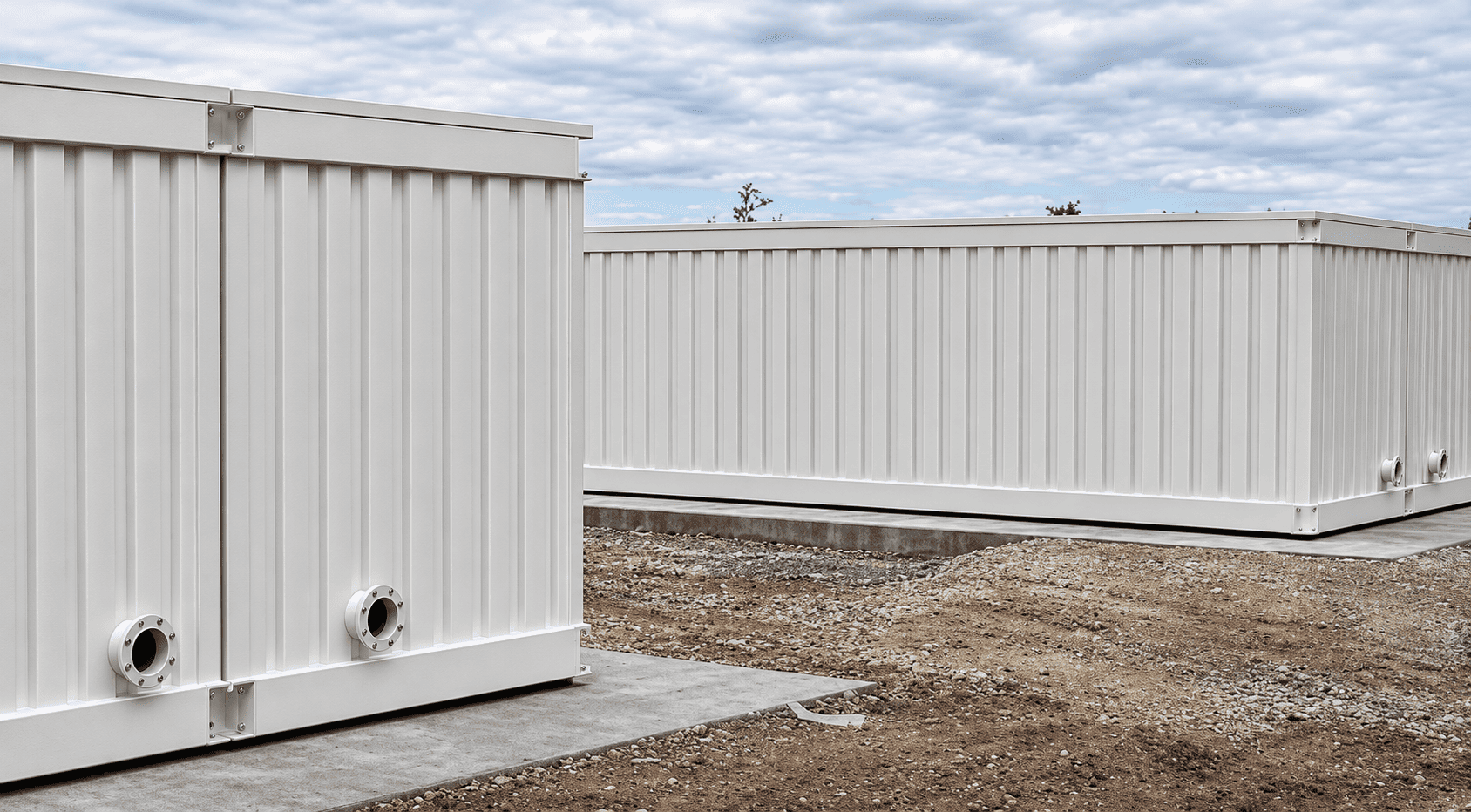
When it comes to compact sewage treatment, prefabricated and containerized plants can be worth considering when space is limited or building new sewer infrastructure would require extensive work. These configurations integrate multiple treatment stages into units designed for on-site installation, with transport and assembly methods defined according to the project.
The choice must still consider how users are distributed, the distances between settlements, the availability of power, and access for maintenance. A decentralized system can reduce the need to extend the sewer network, but it requires proper organization of the monitoring and management of each individual unit.
IDRO Group offers domestic wastewater treatment solutions through prefabricated biological plants and modular systems, also designed for residential facilities, tourist resorts, and small communities. To learn more about the available technologies, visit the page dedicated to domestic wastewater treatment.
Factors to consider before choosing a treatment technology
The choice between a centralized and a decentralized plant doesn’t depend solely on the number of residents. Comparing the alternatives requires assessing local conditions together with wastewater characteristics and treatment objectives.
- Population equivalent and flow rates: sizing must account for the organic load produced by the users served, as well as average volumes and peak flows.
- Seasonal variability: in tourist areas, campgrounds, and resorts, occupancy can change significantly throughout the year, affecting the volumes and pollutant load to be treated.
- Sewer networks and distances: the availability of existing infrastructure and the cost of any expansion affect the cost-effectiveness of the different configurations.
- Available space: the area that can be dedicated to the plant and the civil works required can steer the choice toward a conventional facility or a prefabricated or containerized solution.
- Required quality for discharge or reuse: the process must deliver performance consistent with the final receiving body and applicable requirements. If water reuse is planned, the quality requirements for that specific use must be defined.
- Operation and maintenance: staff availability, equipment accessibility, sludge handling, and access to technical support all affect the operational sustainability of the solution.
These criteria make it possible to compare alternatives by looking at the entire system, not just the treatment plant. For example, a decentralized solution can reduce collection infrastructure but require management spread across multiple sites, while a centralized plant can concentrate operations but involve significant investment in the sewer network when users are far apart.
Which technologies to consider for wastewater treatment
What is the most effective treatment technology for urban and rural areas? There is no single best solution. Centralized plants are generally suited to handling large volumes of wastewater collected by the sewer system, while in small towns and rural areas, compact, modular, or decentralized systems may be more appropriate when users are far apart or space is limited.
Once the overall configuration has been defined, the treatment process must be selected. SBR, MBBR, and MBR biological systems have different characteristics and are not interchangeable: their suitability depends on wastewater composition, flow variations, available space, and treatment objectives.
SBR biological plants for variable flows
SBR (Sequencing Batch Reactor) systems carry out the different stages of biological treatment in sequence within the same reactor. Operations are organized in cycles that include, depending on the configuration, filling, biological treatment, settling, and discharge of the treated water.
This mode of operation can be useful when flow rates and pollutant loads vary over time, as long as the cycles are sized to match the discharge profile. It is therefore a technology to evaluate based on actual operating conditions, not simply on the size of the settlement.
MBBR plants for compact and modular solutions
MBBR systems (Moving Bed Biofilm Reactor) promote biomass growth on mobile carriers inside the biological reactor. Treatment relies on the activity of microorganisms that break down the biodegradable organic matter in the wastewater.
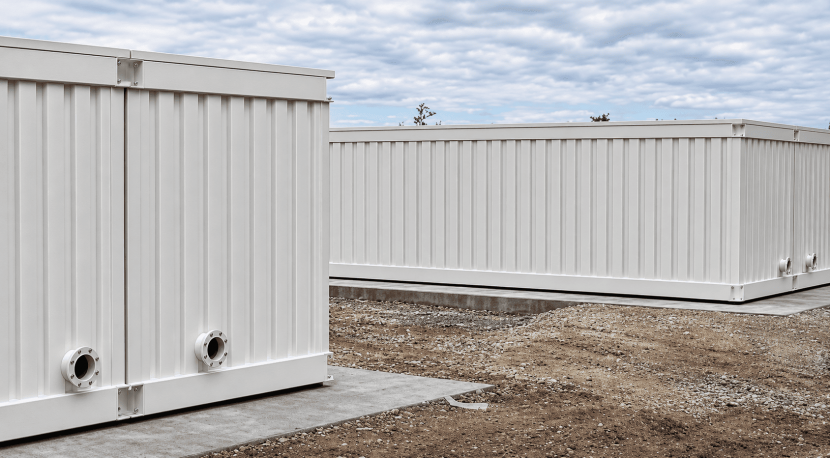
This technology can be integrated into compact and modular plants sized according to the hydraulic and pollutant load to be treated. IDRO Group’s containerized MBBR plants can include pretreatment, biological oxidation, final settling, and disinfection, depending on project requirements.
Compared with an SBR system, the MBBR configuration is based on an attached-growth biological process on mobile carriers, rather than on organizing treatment in successive cycles within the same reactor. The choice must therefore consider the flow profile, the pollutant load, and the characteristics of the entire treatment train.
MBR plants for high effluent quality and reuse
MBR (Membrane Bioreactor) systems combine biological treatment with separation through ultrafiltration membranes. The membranes retain biomass and suspended solids, helping produce an effluent consistent with the project objectives.
Compared with a conventional biological configuration where solids are separated by settling, an MBR system adds a membrane barrier to the separation stage. This can be useful when space is limited or specific treated water quality is required.
However, energy consumption, membrane management, and maintenance activities must also be taken into account. Any water reuse must also be designed around the end use and the applicable quality requirements.
IDRO Group offers containerized MBR plants for domestic wastewater treatment, with pretreatment, biological treatment, and membrane filtration sections.
Prefabricated systems and Imhoff tanks for small communities
For some small settlements, Imhoff tanks can be used as preliminary treatment, promoting the separation of settleable solids and the removal of part of the organic load. They do not automatically replace a complete treatment plant: any subsequent stages must be defined based on wastewater characteristics, the receiving body, and discharge requirements.
IDRO Group offers prefabricated Imhoff tanks in reinforced concrete and polyethylene, as well as biological plants for small residential settlements. The choice must consider the required capacity and the overall performance needed to meet applicable requirements.
Two IDRO Group plants for different settings
IDRO Group’s project references show how treatment technologies can be configured to meet the operational needs of each settlement. The following projects illustrate the use of compact and modular biological systems in specific settings.
A compact MBBR plant for domestic wastewater treatment in Djibouti
To treat domestic wastewater at the Italian military support base in Djibouti, IDRO Group designed an MBBR biological plant with a capacity of 64 m³ per day. The treatment train includes pretreatment, biological oxidation, lamella settling, and final disinfection.
The project shows how multiple treatment stages can be integrated into a compact wastewater treatment plant developed for a specific operational setting.
Discover the IDRO Group project for domestic wastewater treatment in Djibouti.
A preassembled MBR plant for a base camp in Kazakhstan
In Kazakhstan, IDRO Group built four containerized MBR plants to treat domestic wastewater at a base camp. Each unit is sized for a population equivalent of 200 and a flow rate of 40 m³ per day.
The preassembled configuration was chosen to reduce the footprint and simplify installation. The project also includes the option to expand capacity with additional sections of the same type, and takes into account harsh climate conditions and variations in incoming wastewater characteristics.
This reference shows how a modular wastewater treatment plant can be designed to meet specific space, installation, and operating constraints, without assuming that the same configuration is suitable for every settlement.
Discover the IDRO Group wastewater treatment project in Kazakhstan.
What is the difference between centralized and decentralized wastewater treatment?
Centralized treatment conveys wastewater collected by the sewer system to a single plant, while decentralized wastewater treatment takes place close to individual users or groups of settlements. The choice depends on how the population is distributed, existing infrastructure, and operational needs.
When is a compact wastewater treatment plant a good option?
A compact wastewater treatment plant can be considered for small towns, isolated settlements, or sites with limited space, provided the configuration matches the expected flow rates and pollutant loads. Feasibility must be verified based on wastewater characteristics and discharge requirements.
Which technology is best for a small town?
There is no single best technology. SBR, MBBR, and MBR systems meet different needs. The choice depends on the flow profile, pollutant load, available space, required effluent quality, and how the plant will be operated.
Can modular plants be expanded in the future?
Some modular configurations can be designed to accommodate future expansion. Whether expansion is actually possible depends on the chosen technology, the initial sizing, and the availability of space and infrastructure.
IDRO Group: wastewater treatment solutions for every setting
IDRO Group designs and builds domestic wastewater treatment plants, offering biological, prefabricated, compact, and modular solutions. Each configuration is evaluated based on site conditions, wastewater characteristics, and project objectives.
To learn more about the available solutions, visit the domestic wastewater treatment section or contact IDRO Group.